Flexible Conduit Pipes for Solar & Wind Energy Installations: A Complete Guide
Gujarat is building more solar and wind power than any other state in India. New solar farms and wind turbines are going up every month. But there is one small part of these big projects that people often forget: the cables.
Cables carry electricity from solar panels and wind turbines to the power grid. If these cables get damaged by heat, rain, or animals, the whole system can fail. That is where flexible conduit pipes come in.
In this guide, we explain what flexible conduit pipes are, why solar and wind projects need them, and how to pick the right one. We keep things simple, so anyone can understand it, even if you are new to this topic.
What Is a Flexible Conduit Pipe?
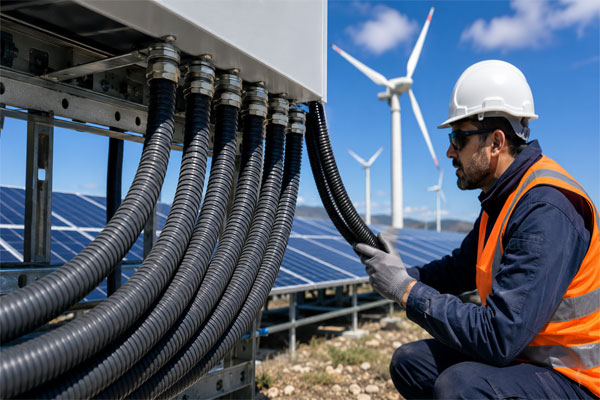
A flexible conduit pipe is a bendable plastic tube. It goes around electrical cables to protect them. Think of it like a strong, flexible shield for wires.
Unlike metal pipes, flexible conduit pipes are light and easy to bend. You can twist them around corners, machines, and tight spaces without any trouble.
Here is what makes a flexible conduit pipe useful:
Bendable – it curves around obstacles easily
Strong – it protects wires from cuts, rubbing, and pressure
Lightweight – easy to carry and install
Non-metallic – made from tough plastic like PA-6, PP, or PE, so it does not rust
Long-lasting – built to survive years of outdoor use
Why Solar and Wind Power Plants Need Cable Protection
Solar and wind power plants are built outdoors. This means their cables face tough conditions every single day. Here are the problems these cables deal with:
- Hot sun and UV rays – Gujarat gets very hot summers. Sunlight can dry out and crack unprotected wires over time.
- Heavy monsoon rain – Water can enter open wiring and cause short circuits.
- Dust and sand – Open areas like solar farms collect a lot of dust, which can damage exposed cables.
- Rats and small animals – Rodents often chew on wires, which can stop a whole system from working.
- Vibration – Wind turbines shake and move. This can wear down cables that are not properly protected.
- Rough handling – During installation, cables get pulled, bent, and stepped on. Without protection, they can tear.
Any one of these problems can cause a power plant to stop working. Repairs are costly, and lost power means lost money. This is why cable protection is not something to skip. It is one of the most important parts of building a solar or wind project the right way.
How Flexible Conduit Pipes Solve These Problems
Flexible conduit pipes are made to handle exactly these problems.
| Problem | How Conduit Pipe Helps |
|---|---|
| Hot sun and UV rays | Weather-resistant plastic protects cables from heat damage. |
| Monsoon rain | Sealed design keeps water away from wires. |
| Dust and sand | Closed pipe design keeps dust out. |
| Rats and animals | Tough outer layer is hard for rodents to chew through. |
| Vibration | Flexible design absorbs movement without cracking. |
| Rough handling | Strong walls protect cables during and after installation. |
Some conduit pipes also come in a
flame-retardant
version. This means the pipe slows down fire instead of helping it spread.
This matters a lot near electrical panels, inverters, and other equipment
that can overheat.
Where Are Conduit Pipes Used in a Solar Power Plant?
A solar power plant has many points where cables run from one part to another. Each point needs protection.
- From Solar Panel to Combiner Box Each solar panel sends electricity through a cable called a DC cable. A combiner box is where power from several panels comes together. These cables run outdoors, often across long distances. Conduit pipe protects them from sun and rain.
- Combiner Box to Inverter The inverter changes solar power into a type of electricity that can be used or sent to the grid. Cables between the combiner box and inverter often run through tight, busy areas. Conduit pipe keeps them organised and safe.
- Inverter to Transformer or Grid Connection This is often the busiest and most important cable run in the whole plant. It needs strong, reliable protection.
- Earthing (Grounding) Cables Earthing cables carry extra electricity safely into the ground. This protects workers and equipment. These cables also need protection from moisture and physical damage.
- Underground Cable Routing Some cables run underground between rows of solar panels. Conduit pipe stops soil, water, and pests from damaging these buried cables.
Gujarat’s Solar and Wind Boom: Why This Matters Right Now
Gujarat is not just another state building solar and wind power. It is leading the entire country.
As of mid-2026, Gujarat has more total clean energy capacity than any other Indian state, at over 50 gigawatts. It is the number one state in India for wind power. It also ranks among the top states for solar power.
What makes this even bigger is what is happening right now. Gujarat currently has more than 1,500 solar, wind, and hybrid projects under construction. That is thousands of kilometres of cable that all need protection.
One project stands out above the rest. The Khavda Renewable Energy Park in Kutch, Gujarat, is being built to become the largest renewable energy park in the world. It is planned to reach a massive capacity, and a large part of it is already up and running.
For EPC contractors, project developers, and panel manufacturers, this growth means one thing: demand for reliable cable protection is rising fast. Choosing the right conduit pipe supplier now can save time, money, and repair costs later.
Types of Conduit Pipes Best Suited for Solar and Wind Projects
Not all conduit pipes are the same. Different materials work better for different jobs.
| Material | Best For | Key Benefit |
|---|---|---|
| PA-6 (Polyamide) | Hot areas like inverter rooms and control panels | Handles high heat very well |
| PP (Polypropylene) – Flame Retardant | Areas near electrical equipment | Slows down fire spread |
| PE (Polyethylene) | Underground and outdoor cable runs | Strong resistance to water and soil pressure |
| Heavy Duty PP | Wind turbine towers and industrial areas | Extra strength for tough, high-movement locations |
There are also two designs to choose from:
| Conduit Design | Description and Application |
|---|---|
| Standard (Closed) Conduit | A full, closed tube. Best for new installations where cables are pulled through from one end. |
| Slit-Type Conduit | Has a slit down the side, so cables can be placed in from the side. Best for adding new cables to a system that is already built. |
Key Features to Look for When Choosing Conduit for Solar or Wind Projects
Before buying conduit pipe for a solar or wind project, check for these features:
- UV and weather resistance – so the pipe does not crack under sun or rain
- Wide temperature range – so it works in both summer heat and winter cold
- Flame retardant rating – needed near inverters, transformers, and control panels
- Correct size for your cable load – too small can damage cables, too large wastes material
- ISO-certified manufacturing – shows the product meets quality and safety standards
- Proven outdoor durability – the pipe should be tested for long-term outdoor use, not just indoor wiring
Common Mistakes to Avoid When Installing Conduit for Solar or Wind Cables
Even good conduit pipe can fail if it is installed the wrong way. Here are common mistakes to avoid:
- Using the wrong size – A pipe that is too tight can damage cables when they are pulled through. A pipe that is too loose wastes material and space.
- Skipping flame retardant conduit near hot equipment – Standard conduit is not always enough near inverters or transformers.
- Not sealing pipe joints properly – Gaps at joints let in water and dust, which defeats the whole purpose of the conduit.
- Ignoring bend limits – Bending conduit pipe too sharply can crack it or squeeze the cables inside.
- Choosing the cheapest option without checking certification – Non-certified pipe may look similar but fail faster under real outdoor conditions.
Avoiding these mistakes early saves time and money later. A small mistake in cable protection can lead to a big, costly repair.
Why Choose Usha Plastiflex for Your Solar and Wind Project
Usha Plastiflex is based in Ahmedabad, right in the heart of Gujarat’s growing renewable energy sector. That means shorter delivery times and better support for local solar and wind projects.
Here is what Usha Plastiflex offers:
- ISO 9001, ISO 14001, and ISO 45001 certified manufacturing – for quality, environment, and safety standards
- TUV and ARAI certified products – trusted quality marks used across industries
- A wide range of materials – including PA-6, PP flame retardant, and PE conduit pipes
- Both standard and slit-type designs – for new builds and existing systems
- Export-quality standards – the same conduit pipes trusted by international buyers
Whether you are building a solar farm, installing wind turbines, or managing an EPC project, Usha Plastiflex has a conduit pipe built for the job.
Frequently Asked Questions
The right size depends on how many cables you are running and how thick they are. Usha Plastiflex offers a wide range of sizes to match different cable loads.
Yes. Flexible conduit pipes made from PA-6, PP, or PE are built to resist UV rays, heat, and moisture, making them suitable for outdoor solar and wind projects.
It is highly recommended. Areas near inverters and electrical panels can get hot, so flame retardant conduit adds an extra layer of safety.
Good-quality, weather-resistant conduit pipe can last for many years outdoors, even with daily sun and rain exposure. Using the right material for your climate makes a big difference.
Yes. PE (Polyethylene) conduit pipe is a popular choice for underground cable runs because it resists water and soil pressure well.
PA-6 handles high heat very well, which makes it ideal for hot areas like inverter rooms. PP, especially the flame retardant version, is often chosen for extra fire safety near electrical equipment.
Yes. Usha Plastiflex manufactures conduit pipes to export-quality standards, making them suitable for both Indian and international solar and wind projects.
Look for ISO 9001 (quality), ISO 14001 (environment), and ISO 45001 (safety) certification, along with product-specific approvals like TUV or ARAI.
Conclusion
Solar and wind power are growing fast in Gujarat, and the cables inside these projects need real protection. Flexible conduit pipes offer a simple, reliable way to protect cables from heat, rain, dust, animals, and daily wear.
Choosing the right conduit pipe is not just a small detail. It protects your entire investment. If you are working on a solar or wind project and need trusted cable protection, Usha Plastiflex offers ISO-certified conduit pipes built for exactly this kind of work.
Contact Usha Plastiflex today to find the right conduit pipe for your solar or wind energy project.