Usha Plastiflex
Flexible Conduit Pipe Manufacturer in India
Usha Plastiflex is proud to be an ISO 9001, ISO 14001, and ISO 45001 certified organization, reflecting our commitment to:


Usha Plastiflex
Usha Plastiflex is proud to be an ISO 9001, ISO 14001, and ISO 45001 certified organization, reflecting our commitment to:
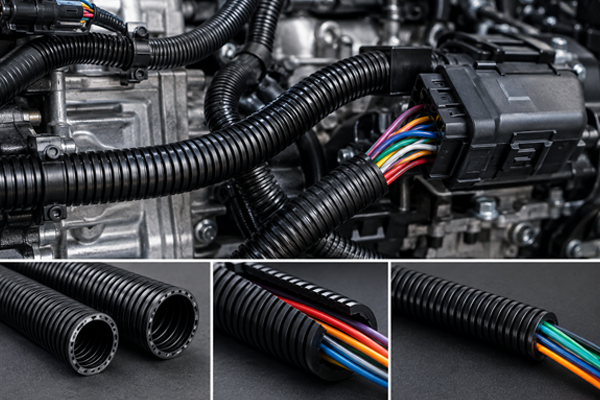
Usha Plastiflex is a reliable flexible conduit pipe manufacturer based in Ahmedabad, Gujarat. We offer a wide range of cable protection products, including Polyamide PA-6 flexible conduits, flame-retardant conduits, Polyethylene conduits, Polypropylene conduits and heavy-duty flexible conduit pipes. These conduits are designed to protect electrical wires and cables from bending, vibration, moisture, abrasion and other types of external damage.
Our flexible conduit pipes are widely used in electrical panels, industrial machines, automation systems, robotics, solar projects, railway applications, automotive wiring and building infrastructure. At Usha Plastiflex, we focus on quality, durability and practical solutions for different industrial needs. Customers can contact us with their required size, material, quantity and application to get suitable product guidance and quotation support.
At Usha Plastiflex, our mission is to design and manufacture high-quality flexible corrugated conduit solutions that ensure safety, durability, and reliable performance for electrical and infrastructure applications. We are committed to delivering products that meet stringent quality standards through advanced manufacturing practices, continuous process improvement, and strict quality control.
We strive to achieve customer satisfaction by offering technically sound, cost-effective, and application-specific solutions while maintaining consistency, timely delivery, and responsive support. Our mission also emphasizes environmental responsibility and workplace safety, aligning our operations with sustainable practices and internationally recognized management systems.

To become a recognized and trusted leader in flexible corrugated conduit solutions by delivering technically advanced, reliable, and sustainable products that set benchmarks in quality and performance.
We envision continuous growth through innovation, process excellence, and customer-centric solutions, while expanding our presence in domestic and international markets. By embracing modern manufacturing technologies, environmental responsibility, and the highest standards of workplace safety, Usha Plastiflex aims to support the evolving demands of global infrastructure and electrical systems.
Our vision is to build a future-driven organization known for engineering reliability, ethical practices and long-term partnerships, creating lasting value for customers, employees, and stakeholders.

We are committed to delivering consistent, high-performance flexible corrugated conduit solutions through strict quality control, standardized processes, and continuous improvement.
Understanding customer requirements and providing reliable, cost-effective, and application-specific solutions is at the center of everything we do.
We believe in adopting advanced manufacturing technologies, optimizing processes, and applying sound engineering practices to enhance product performance and efficiency.

Our products are manufactured in compliance with recognized industry standards and quality benchmarks.
Each conduit undergoes strict quality checks to ensure safety, reliability, and consistent performance.


Usha Plastiflex serves customers across international markets, including North America, Asia, Russia, Australia and Africa.

A flexible conduit pipe is a protective tube used to cover and organize electrical wires. It helps protect cables from bending, vibration, abrasion, moisture and external damage.
Usha Plastiflex is a flexible conduit pipe manufacturer based in Vatva, Ahmedabad, Gujarat. The company manufactures conduit solutions for electrical, automation and industrial cable-protection applications.
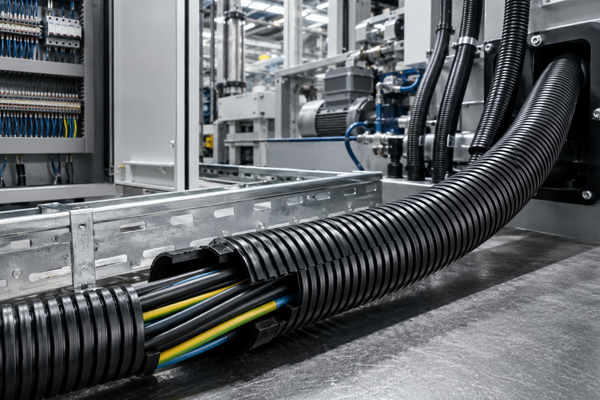
Usha Plastiflex manufactures Polyamide PA6, Polyethylene and Polypropylene flexible conduits. The range includes slit, non-slit, flame-retardant and heavy-duty conduit options.
A Polyamide PA6 flexible conduit is a durable cable-protection pipe offering strength and flexibility. It is commonly used where cables face regular movement, bending, vibration or mechanical stress.
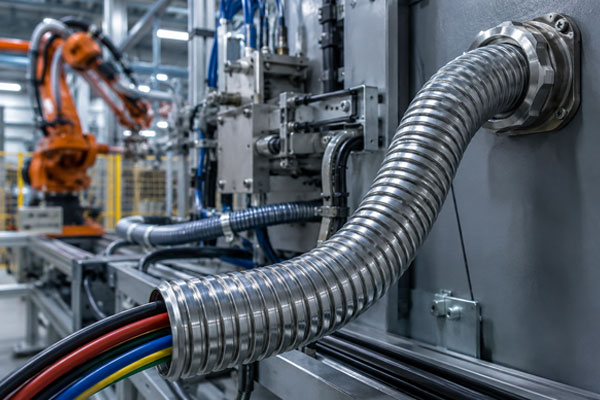
Flexible conduit pipes are used in electrical panels, industrial machinery, automation systems, robotics, solar installations, railway projects, automotive wiring and infrastructure applications.
Slit conduit has an opening along its length, making it easier to install around existing cables. Non-slit conduit is generally used when wires can be passed through the conduit during installation.
Yes. Usha Plastiflex offers flame-retardant flexible conduit options in Polyamide PA6 and Polypropylene materials for applications requiring improved cable and wiring safety.
Polyamide PA6 flexible conduit is commonly selected for industrial automation, control panels, robotics and machinery because it combines flexibility with strong resistance to movement and abrasion.
Yes. Flexible conduits are available in multiple sizes to accommodate different wire diameters and cable bundles. Buyers should select the size according to cable quantity, outer diameter and installation space.
Consider the conduit material, cable size, operating temperature, bending movement, vibration, chemical exposure, flame-resistance requirement and installation method before selecting a product.
Yes. Customers from different parts of India can contact Usha Plastiflex with their required product, size, quantity, application and delivery location to confirm supply availability.
Share your required material, conduit size, slit or non-slit type, quantity, application and delivery location with the Usha Plastiflex sales team to request a quotation.