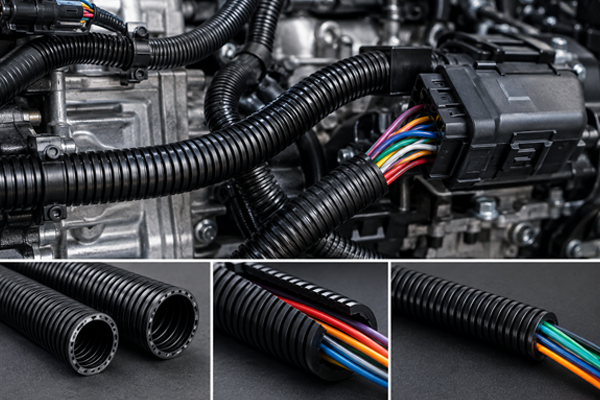
Wire Harness Flexible Pipe & Black Conduit Guide
A Wire Harness Flexible Pipe is used to organise, protect, and support electrical wires in vehicles, machines, control panels, household appliances, and industrial equipment. It creates a protective covering around wires and helps prevent damage caused by vibration, bending, dust, moisture, chemicals, and regular movement.
A Black Flexible Conduit Pipe is also widely used for safe electrical wiring. Its flexible structure allows installers to route wires through narrow spaces, curved paths, and complex equipment layouts. It is commonly selected for automotive wiring, industrial machinery, electrical panels, solar systems, construction projects, and automation equipment.
Choosing the correct flexible pipe is important because exposed or poorly protected wires may crack, overheat, rub against metal surfaces, or become damaged. The right conduit improves wiring safety, reduces maintenance, and increases the working life of electrical systems.
What Is a Wire Harness Flexible Pipe?
A Wire Harness Flexible Pipe is a lightweight protective tube designed to hold multiple electrical wires together. It is generally manufactured from materials such as polypropylene, polyethylene, polyamide, PVC, or other engineering plastics.
The pipe may have a corrugated outer surface that allows it to bend easily without collapsing. This design makes it suitable for applications where wires need to move, turn, or pass through limited spaces.
Wire harness pipes are commonly used in:
- Cars, buses, trucks, and commercial vehicles
- Industrial machines and production lines
- Electrical and electronic equipment
- Control panels and switchgear
- Home appliances
- Solar power systems
- Railway and transportation equipment
- Agricultural machinery
Benefits of Using Wire Harness Flexible Pipe
The main purpose of a wire harness pipe is to protect electrical cables. However, it also offers several other practical benefits.
Protection Against Physical Damage
Wires installed inside machines and vehicles may rub against metal parts. Continuous rubbing can damage the outer insulation of a wire. A flexible pipe creates a barrier between the wire and nearby surfaces.
Easy Wire Organisation
A large number of loose wires can make maintenance difficult. A conduit pipe keeps them together and makes the wiring system easier to inspect, identify, repair, or replace.
Better Flexibility
The corrugated structure allows the pipe to bend around corners and equipment parts. It can be installed without using many elbows, joints, or complicated fittings.
Resistance to Dust and Moisture
A properly selected conduit helps protect cables from dust, water splashes, oil, grease, and other contaminants. The level of protection depends on the pipe material and installation method.
What Is a Black Flexible Conduit Pipe?
A Black Flexible Conduit Pipe is a bendable protective tube used for electrical and cable management applications. The black colour is commonly preferred because it offers a clean industrial appearance and may provide better resistance to sunlight when suitable UV-resistant materials are used.
These pipes are available in different internal diameters, wall thicknesses, materials, and flexibility levels. Some products are lightweight and suitable for indoor wiring, while others are developed for demanding automotive or industrial conditions.
Black conduit pipes are widely used where cables face:
- Continuous vibration
- Sharp bends
- Heat exposure
- Oil and chemical contact
- Dusty conditions
- Outdoor environments
- Mechanical movement
- Risk of impact or abrasion
Wire Harness Flexible Pipe Versus Normal Electrical Pipe
A normal rigid electrical pipe is useful for straight wiring routes inside buildings. However, it may not work well around moving parts or curved surfaces.
| Feature | Wire Harness Flexible Pipe | Normal Rigid Pipe |
|---|---|---|
| Flexibility | High | Low |
| Installation Around Bends | Easy | Requires elbows |
| Suitable for Vibration | Yes | Limited |
| Automotive Applications | Highly suitable | Usually unsuitable |
| Cable Organisation | Excellent | Good |
| Use in Moving Machinery | Suitable when correctly selected | Not recommended |
| Installation Speed | Faster in complex layouts | Faster on straight routes |
A flexible pipe is usually better for vehicles, machines, equipment, and complex cable routes. A rigid pipe may be preferred for fixed building wiring and long straight installations.
Applications of Black Flexible Conduit Pipe
A Black Flexible Conduit Pipe can be used in many electrical and mechanical systems.
Automotive Wiring
Modern vehicles contain many electrical cables for lights, sensors, batteries, infotainment systems, engines, and safety equipment. Flexible conduit protects these wires from heat, movement, vibration, oil, and surface contact.
Industrial Machinery
Factories use conduit pipes around motors, control units, robotic equipment, sensors, and production machines. The pipe helps maintain safe wiring even when the machine produces constant vibration.
Electrical Control Panels
Flexible conduit can guide incoming and outgoing wires around a control panel. It improves cable management and reduces the risk of accidental damage.
Solar Installations
Solar power systems require cables to travel between panels, inverters, batteries, and distribution equipment. A UV-resistant black conduit may protect outdoor cables from sunlight and weather exposure.
Choosing a Braided or Flexible Pipe Supplier
Before selecting a Wire Harness Flexible Pipe supplier, compare more than the selling price. A reliable supplier should understand the application and suggest a suitable pipe size, material, and performance level.
Ask the supplier about:
- Available pipe diameters
- Raw material used
- Operating temperature
- UV resistance
- Flame-retardant options
- Minimum bending radius
- Colour and length options
- Sample availability
- Bulk order capacity
- Quality testing
- Packaging and delivery support
Providing complete application details helps the supplier recommend a safer and more suitable product.
Installation Tips for Better Wire Protection
Measure the wiring route before cutting the conduit. Avoid stretching the pipe or creating very sharp bends. Use suitable connectors, clips, clamps, and end fittings to hold the pipe in place.
Keep the conduit away from extremely hot surfaces unless it is designed for high-temperature use. Inspect the pipe regularly in areas exposed to continuous movement, chemicals, or vibration.
Do not overload the conduit with too many wires. Leave enough internal space to pull, remove, or replace cables during maintenance.
Conclusion
A Wire Harness Flexible Pipe provides an effective way to protect and organise cables in vehicles, machinery, electrical systems, solar projects, appliances, and industrial equipment. Its flexible design makes installation easier in curved and limited spaces.
A properly selected Black Flexible Conduit Pipe can protect wires from abrasion, vibration, dust, moisture, chemicals, and environmental exposure. Buyers should compare material quality, size, temperature range, flexibility, and safety properties before making a final decision. Choosing the correct pipe improves electrical safety, reduces cable damage, and supports long-term system performance.
Frequently Asked Questions
It is used to group and protect electrical wires from abrasion, vibration, moisture, dust, chemicals, bending, and physical damage.
It is commonly installed in automobiles, industrial machines, control panels, solar systems, appliances, railway equipment, and automation systems.
The corrugated design allows the pipe to bend easily while maintaining its shape and protecting the wires inside.
Yes, but the pipe should be manufactured from UV-resistant and weather-resistant material suitable for outdoor conditions.
Measure the total outer diameter and number of wires. Choose a pipe with enough internal space so that the wires are not tightly packed.
Heat resistance depends on the raw material. Always check the operating temperature range before installing it near engines, motors, or hot machinery.
Certain materials resist oil, grease, fuel, acids, and other chemicals. The chemical type and concentration should be shared with the supplier before selection.
Some conduit pipes are available with flame-retardant properties, but not every black pipe is flame retardant. Buyers should check the technical specification.
Yes, provided the conduit is designed for repeated bending, vibration, and mechanical movement.
Share the required size, application, temperature, movement, chemical exposure, indoor or outdoor use, required quantity, and safety standards.