Cable Protection Needs in Modern EV Charging Projects
Electric vehicle charging infrastructure is expanding across India. Charging points are now being installed in residential societies, commercial buildings, offices, malls, highways, parking areas, fleet depots and industrial facilities.
Behind every EV charger is an electrical network containing power, control and communication cables. These cables may be exposed to moisture, dust, vehicle movement, vibration and regular maintenance activity. Proper cable protection therefore becomes an important part of a reliable charging installation.
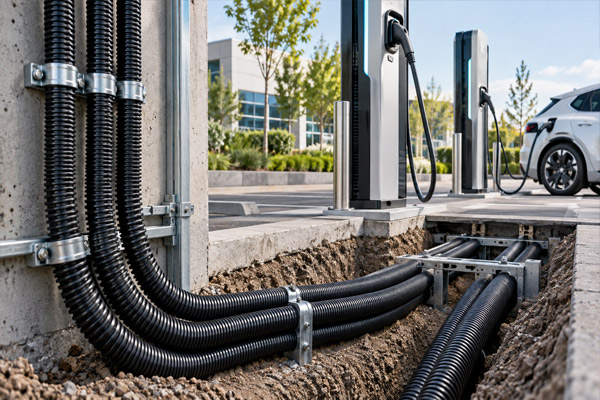
An HDPE Flexible Conduit Pipe provides a practical route for protecting and organising these cables. Its flexible design helps installers work around bends and equipment while providing an additional protective layer around electrical wiring.
For projects in Ahmedabad, Gujarat and other regions of India, selecting the right conduit can help improve installation quality and simplify future maintenance.
Why EV Charging Stations Need Cable Protection
EV charging systems are often installed in more demanding environments than normal indoor electrical wiring.
A charging point in a parking area may face vehicle movement and dust. Outdoor charging stations can be exposed to sunlight and rain. Fleet charging facilities may operate for long hours and involve frequent movement of vehicles and equipment.
Electrical cables may run between:
- Distribution panels
- EV chargers
- Control panels
- Metering equipment
- Communication systems
- Junction boxes
- Monitoring devices
A properly selected flexible conduit helps keep these cables organised and protects them from accidental rubbing, impact and environmental exposure.
Where HDPE Conduit Can Be Used in EV Projects
HDPE conduit can be considered for different cable routes within an EV charging installation.
It may be used between electrical panels and charging equipment, around control wiring, near monitoring systems and in selected indoor or outdoor cable runs.
Its flexibility makes it useful where cables need to pass around structures, columns, machinery or tight spaces. Unlike a rigid route that may require multiple bends and fittings, flexible conduit can make complicated cable paths easier to manage.
The final conduit type should always be selected according to the electrical design and actual project conditions.
Why HDPE Is Suitable for Demanding Installations
High Density Polyethylene combines flexibility, durability and corrosion resistance.
Because it is non metallic, HDPE does not rust like traditional metal conduit. This can be useful in areas where electrical installations may be exposed to humidity or moisture.
Its lightweight construction can also make handling and installation easier during large electrical projects.
Depending on the conduit specification, the product may provide protection against impact, moisture and selected environmental conditions.
For outdoor EV charging projects, buyers should confirm UV resistance, operating temperature and weather suitability before finalising the product.
Choosing the Correct Conduit Size
Conduit size should not be selected only by looking at the outside diameter.
Contractors should consider:
- Number of cables
- Cable outer diameter
- Total cable bundle size
- Space required for cable pulling
- Type of glands and fittings
- Future maintenance requirements
A conduit that is too small can make cable installation difficult. It may also make future cable replacement more complicated.
On the other hand, an unnecessarily large conduit may occupy additional space and may not properly match the required connectors.
For projects involving multiple EV chargers, standardising suitable conduit sizes can make installation and maintenance easier.
What Buyers Should Check Before Ordering
Before requesting a quotation, project buyers should provide complete application details to the manufacturer.
Important information includes the required conduit size, quantity, cable application, installation location and environmental conditions.
For outdoor projects, buyers should mention whether the conduit will face direct sunlight or rain. For industrial charging stations and fleet depots, possible exposure to oil, vibration, chemicals or mechanical movement should also be considered.
Providing this information helps a manufacturer recommend a conduit according to the actual application rather than supplying a general purpose product.
Installation Planning Helps Reduce Maintenance
Even a good conduit requires proper installation.
Cable routes should avoid unnecessary tension, sharp edges and areas where vehicles or machinery may crush the conduit. Entry points around electrical panels and charging units should also be properly planned.
Compatible fittings and glands help keep the cable route organised around termination points.
If a charging facility may expand in the future, contractors can also consider whether the conduit layout will allow additional cables or charging equipment to be installed with less modification.
Why Consistent Supply Matters for EV Projects
Large EV charging projects may include many charging points across different locations.
For contractors and EPC companies, consistency in conduit size, construction and fitting compatibility is important. Differences between batches can create unnecessary problems during installation and replacement.
When selecting an HDPE Flexible Conduit Pipe manufacturer, buyers should check available sizes, product specifications, supply capacity, lead time and support for repeat orders.
Usha Plastiflex, based in Ahmedabad, Gujarat, provides flexible conduit solutions for industrial and electrical cable protection applications across India.
Conclusion
As EV charging infrastructure grows, cable protection should be considered an important part of electrical system planning.
HDPE flexible conduit can provide a lightweight, corrosion resistant and adaptable solution for protecting power and control cables when the correct specification is selected.
Contractors, EPC companies and purchasing teams should consider cable size, installation environment, UV exposure, operating temperature and mechanical conditions before ordering.
Choosing a suitable conduit based on actual project requirements can support organised installation, easier maintenance and dependable long term cable protection.
Frequently Asked Questions
Yes. It can be used for protecting electrical and control cables where the conduit specification is suitable for the installation environment and electrical design.
Selected HDPE conduits can be suitable for outdoor applications. Buyers should confirm UV resistance, temperature range and weather exposure requirements before ordering.
Consider the number of cables, their outer diameters, cable bundle size, required pulling space and fitting dimensions.
Share conduit size, quantity, cable application, installation environment, indoor or outdoor use, fitting requirements and delivery location.
Buyers can source it from conduit manufacturers and industrial suppliers serving Ahmedabad and Gujarat. Compare specifications, size availability and application support before ordering.
Yes. Bulk requirements can generally be planned according to required sizes, quantities and project schedules. Buyers should confirm production capacity and delivery timelines.
Check conduit material, available sizes, fitting compatibility, environmental suitability, product consistency, lead time and the supplier ability to support repeat project requirements.