How Do Mobile Robots Change Cable Protection Requirements?
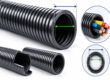
Convoluted corrugated tubes can organise and mechanically protect suitable cable bundles inside autonomous mobile robots, commonly called AMRs. Each route needs protection matched to its space, temperature, vibration and movement conditions.
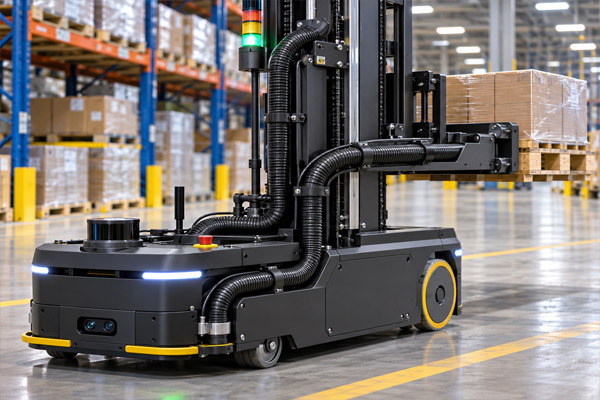
A warehouse robot travels between storage areas, packing stations and transfer points. Its onboard wiring connects navigation sensors, controllers, drive units and any fitted load-handling equipment. Those connections need a practical layout within a compact machine.
Transport and logistics robotics remains an active area of automation in 2026. For robot builders and fleet integrators, cable protection deserves attention during design and maintenance planning. The aim is to keep routes supported, accessible and suited to the way each part of the robot operates.
A Moving Robot Has Several Different Cable Duties
A robot moving across the floor does not mean every cable inside it bends repeatedly.
Wiring secured to the chassis may stay in the same position relative to its mounting points. A lifting module can introduce repeated movement, while a removable cover may require access only during service.
Describe these duties separately when discussing tubing.
Fixed routes need assessment for vibration, abrasion and their surrounding environment. Moving sections also need suitable bending or twisting performance. Service sections need a layout that allows the approved access procedure.
This gives the supplier a clearer understanding of the application than describing the whole machine simply as a mobile robot.
Use the Available Space Carefully
Space inside an AMR can be limited by batteries, controllers, mounting brackets and other equipment. The cable route has to fit within those boundaries.
Check the actual bundle dimensions against the tubing’s usable internal diameter. Then review the outside diameter against the available routing space and proposed clips.
Allow the clearances required by the robot design around removable equipment and access panels.
A tube that fits the wires may still be difficult to position inside the finished assembly. Review the route with the surrounding components in place so the selected size works during assembly and service.
Check Clearance During Docking and Load Transfer
An arrangement that looks suitable on a stationary robot needs assessment during its normal operating cycle.
Docking, lifting and transferring loads can change the available clearance around fitted modules. A cable route must accommodate those movements without becoming trapped, stretched or rubbed against another component.
The robot designer should define the movement limits and clearances to preserve.
Review the tubing route near wheels, moving mechanisms and attachment points. Keep the manufacturer’s specified sensor viewing areas and service access clear.
Assessment should use the intended robot configuration, including fitted covers and load-handling equipment. This helps reveal layout issues before the same arrangement is repeated across a fleet.
Choose Materials for Cleaning and Daily Exposure
Warehouse conditions vary between facilities. Some areas are relatively dry, while others involve dust, packaging debris, temperature changes or contact with cleaning products.
Record the exposure at the cable route itself. Include heat from nearby equipment and any fluids that could contact the tubing during operation or cleaning.
Polyamide PA-6, polyethylene and polypropylene products have different properties. Performance also varies between individual grades and constructions.
Ask for technical information relevant to the proposed location. Where flame behaviour or another material requirement is specified, request evidence for the selected product.
Cleaning suitability needs consideration of the complete protection system, including openings and end connections. A tube’s resistance to a cleaning chemical does not establish a sealed assembly.
Make the Tubing and Supports Work Together
Clips and holders help maintain the intended cable route. They need to match the tubing dimensions and corrugated profile.
Review how the tube is retained and how loads are managed near connectors. The mounting arrangement should support the route without creating unwanted tension or restricting movement required by the design.
Suitable attachments also make inspections more practical. Maintenance staff should be able to examine relevant sections and reach removable components using the approved procedure.
For moving modules, assess the tubing, cables and supports together. Bending limits and repeated movement requirements apply to the installed arrangement, not just the tube supplied on a reel.
Look for Wear Patterns Across the Fleet
Fleet maintenance creates an opportunity to compare similar robots working under similar conditions.
If several units show scuffing near the same bracket, record the location and operating circumstances. The pattern may point to a common routing or support issue that needs investigation.
Useful observations include damaged ribs, displaced tubing, loose attachments and changes near conduit ends.
Follow the robot manufacturer’s maintenance requirements when setting inspection activities. Keep findings linked to the robot model, fitted module and cable route.
The same information helps with spare parts planning. Record the tubing reference, material, dimensions and relevant attachments so replacements can be checked against the installed configuration.
A revised robot model or different payload module may need a separate specification.
Conclusion
Convoluted corrugated tubes should suit the individual cable duties inside a mobile warehouse robot. Space, operating clearance, cleaning exposure and support arrangements all influence the choice.
Share your robot layout and application details with Usha Plastiflex to discuss suitable conduit options. Assess the proposed arrangement before using it as a standard configuration for production or fleet maintenance.
Frequently Asked Questions
Use a common product only when it meets each route’s requirements. Fixed chassis wiring, moving modules and exposed connections can have different mechanical and environmental needs, even within one robot.
Provide the movement direction, travel, bending frequency and required service conditions. Ask for relevant performance information and assess the tubing with the actual cables, supports and module layout.
A suitable slit version can allow access around existing cable assemblies. Non-slit tubing requires an appropriate cable installation sequence. Confirm protection requirements and attachment compatibility before choosing either form.
Compare the tubing’s outside diameter and corrugated profile with the clip requirements. Request a sample fit check and confirm retention and access with the proposed mounting arrangement.
Repeated wear can indicate rubbing, restricted movement or unsuitable support. Review the cause with the robot designer before changing material or wall construction. The complete route may need adjustment.
It may be possible for matching configurations. Check model revisions, fitted modules, cable dimensions and operating conditions before approving a shared product reference for production and spare orders.
Send the required dimensions, material requirements, slit or non-slit preference, quantity and delivery location. Include the robot application, movement conditions, mounting details and any specified test or documentation requirements.