Why Modern Machines Need Better Cable Protection
Factories now depend on sensors, control panels, CNC machines, robotic equipment and automated production lines. These systems use electrical cables that may bend, vibrate or pass through tight spaces. If wiring is left exposed, abrasion, dust, oil and repeated movement can reduce cable life and increase maintenance.
A Nylon Flexible Pipe gives cables an extra protective layer while still allowing flexible routing through complex machine layouts. Made from polyamide material such as PA6, this conduit is useful where strength, flexibility and organized wiring are important.
Why Nylon Flexible Pipe Fits Automation Projects
Rigid conduit suits fixed routes, but automated equipment often needs a more adaptable solution. Robotic cells, packaging machines and material handling equipment can include moving joints, limited space and changing cable paths.
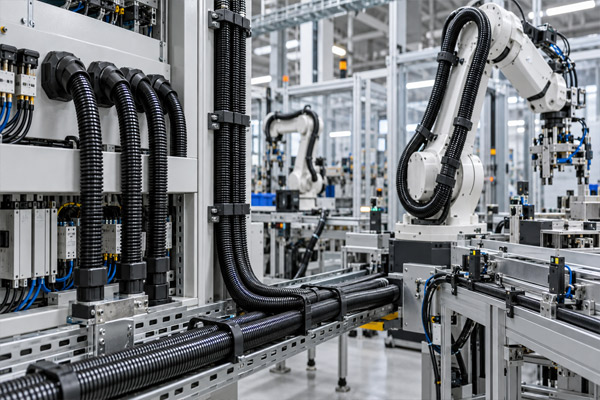
Nylon conduit can bend around machine frames and help protect wires from rubbing against metal surfaces. Its corrugated structure supports flexible routing without making the wiring bulky.
This makes it a practical option for machine builders, OEMs and maintenance teams that need reliable cable protection without creating complicated wiring routes.
Important Factors Buyers Should Check
Choosing a nylon conduit only by price or outside diameter can lead to the wrong product. Buyers should first understand the operating conditions.
Check the cable bundle size, pipe diameter, bending requirement, operating temperature and exposure to oil, moisture, dust or chemicals. The conduit should have enough internal space so cables are not tightly packed.
Matching the conduit with the correct gland or connector is also important. A suitable combination helps keep the conduit securely connected to panels, motors and machines.
PA6 Nylon for Industrial Cable Routing
PA6 polyamide is commonly used for flexible conduit because it offers a useful balance of flexibility and mechanical strength. It is suitable for many machinery applications where vibration, movement and everyday industrial wear are common.
Some projects may also need flame retardant conduit or a specific construction. Buyers should compare the product specification with the actual application instead of assuming every nylon pipe performs the same way.
Usha Plastiflex offers Polyamide PA6 Flexible Conduit along with flame retardant and slit type options for different cable protection requirements.
Slit or Non Slit Which One Should You Buy
A non slit nylon flexible pipe provides enclosed cable routing and works well for many new installations. A slit conduit has an opening along its length, allowing existing cables to be inserted without disconnecting and feeding them through the entire pipe.
Slit conduit can be useful for machine upgrades, retrofit wiring and areas where technicians need easier cable access. Non slit conduit may be preferred where enclosed routing is required.
Choosing between them should depend on the installation method, machine design and future maintenance requirements.
Applications in Modern Industrial Plants
Nylon flexible conduit can be used for robotic equipment, CNC machines, sensors, electrical panels, automotive wiring, packaging machines, solar systems and industrial control equipment.
It is especially useful when cables must pass around corners or through areas where vibration and mechanical contact are common.
For manufacturers in Ahmedabad, Gujarat and across India, growing automation makes reliable cable routing more important.
What to Share When Requesting a Quote
A buyer enquiry should include more than the words Nylon Flexible Pipe. Share the required conduit size, cable bundle diameter, quantity, application, working environment and whether slit or non slit construction is needed.
If the conduit will be used near heat, oil, chemicals or outdoor equipment, mention this before ordering. Also explain whether the wiring will remain fixed or experience repeated movement.
These details help a manufacturer recommend a more suitable conduit and reduce the chance of ordering the wrong size or material.
For bulk requirements, buyers should also ask about available sizes, repeat supply, matching fittings and expected delivery schedule.
Conclusion
Nylon Flexible Pipe is a practical cable protection choice for modern machinery, automation systems and industrial wiring. Its flexible construction makes it easier to route cables through tight layouts while helping protect them from abrasion, vibration and external contact.
The right conduit should be selected according to cable size, movement, temperature, environment and installation method. For industrial buyers, clear technical specifications and reliable supply matter more than choosing only by price.
Usha Plastiflex, based in Ahmedabad, offers flexible corrugated conduit solutions for industrial, automation and electrical cable protection requirements.
Frequently Asked Questions
Nylon Flexible Pipe is used to protect and organize electrical cables in machinery, automation systems, control panels, robotics and other industrial applications.
Yes. It can be suitable for CNC machine wiring where flexible routing and protection from vibration or abrasion are required.
PA6 polyamide is commonly used because it provides flexibility, toughness and useful mechanical protection for many industrial wiring applications.
Measure the cable bundle and select a conduit with sufficient internal space while ensuring compatibility with the required glands or connectors.
Slit conduit allows easier installation around existing cables, while non slit conduit provides enclosed cable routing for new or permanent installations.
Industrial buyers can source nylon flexible conduit from manufacturers in Ahmedabad. Compare available sizes, material type, application suitability, technical support and supply availability before ordering.
Confirm the material, conduit size, quantity, operating environment, temperature conditions, application, slit or non slit requirement, matching accessories and delivery schedule.