Heavy-Duty PP Slit Conduits for Cable Protection
Electrical wires often pass through machines, panels, vehicles, and control systems. These cables need protection from cuts, rubbing, dust, vibration, and regular movement. Polypropylene Flame Retardant Flexible Conduit – Slit Type makes it easy to cover existing wires without disconnecting the complete cable assembly. Its side slit allows quick installation, while the corrugated body supports neat routing in tight and curved spaces.
For areas where cables face stronger impact or repeated movement, Heavy Duty Polypropylene Flexible Conduit – Slit Type provides added mechanical protection. It is used in industrial wiring, automation, machine tools, automotive harnesses, electrical panels, and railway equipment. The right conduit can improve cable life, reduce maintenance, and create a safer wiring system.
What Is Polypropylene Flame Retardant Flexible Conduit – Slit Type?
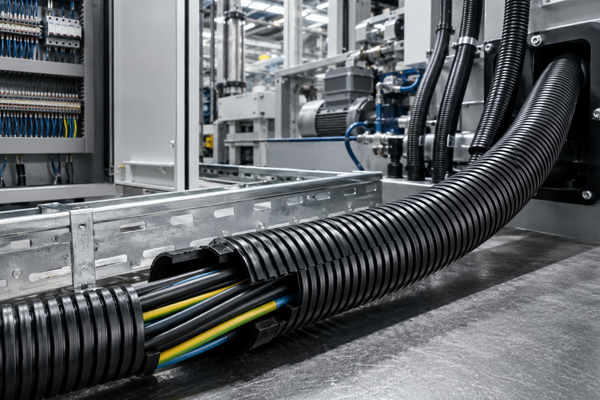
A Polypropylene Flame Retardant Flexible Conduit – Slit Type is a corrugated cable protection tube made from polypropylene. A continuous slit runs along its length, so installers can open the tube and place cables inside from the side. There is no need to pull the full cable through the conduit.
Its flame-retardant property is useful in electrical and industrial areas where fire safety is important. The flexible corrugated design can bend around machines, corners, and compact cable routes.
The main benefits include:
- Quick installation around existing cables
- Easy cable addition or removal
- Flexible routing in narrow spaces
- Protection from abrasion and light impact
- Better cable organisation
- Easier inspection and maintenance
Heavy Duty Polypropylene Flexible Conduit – Slit Type
A Heavy Duty Polypropylene Flexible Conduit – Slit Type is made for applications where cables face higher mechanical stress. Its stronger corrugated wall helps protect wires from rubbing, vibration, impact, and frequent handling.
It is suitable for machinery, robotic equipment, commercial vehicles, material-handling systems, and production lines. The slit design is especially useful when terminals or connectors are already fitted to the cable ends.
This conduit helps industries protect important electrical connections without making the wiring system difficult to inspect or repair.
Flame Retardant vs Heavy-Duty Slit Conduit
| Feature | Flame Retardant Type | Heavy-Duty Type |
|---|---|---|
| Main Purpose | Fire-conscious cable protection | Strong mechanical protection |
| Best For | Panels and electrical systems | Machinery and industrial equipment |
| Key Focus | Flame performance and flexibility | Impact, abrasion, and vibration |
| Installation | Side-entry slit | Side-entry slit |
| Cable Access | Easy | Easy |
| Maintenance | Simple cable inspection | Suitable for demanding conditions |
Both types organise and protect wires, but the correct option depends on the working environment. Some projects may need both flame-retardant performance and heavy-duty strength. Always check the material grade and technical data before ordering.
Common Applications of Polypropylene Slit Conduits
Polypropylene slit conduits are used across many industries because they are simple to install and service.
Industrial Machines
They protect power, sensor, control, and communication wires used in different types of industrial machines.
Automotive Wiring
They cover cable harnesses in cars, buses, trucks, tractors, construction vehicles, and special-purpose vehicles.
Electrical Panels
They keep internal cables organised and make inspection, repair, and fault finding easier.
Robotics and Automation
They protect wires exposed to repeated bending, vibration, and movement in robotic systems and automated machines.
Railway Systems
They can support protected wiring in signalling, lighting, control panels, and railway equipment.
Material-Handling Equipment
They are used around conveyors, lifts, loading systems, and other equipment where wires may face regular movement.
Benefits of Slit-Type Flexible Conduits
The side slit is the main practical advantage. Closed conduits often require cables to be inserted before connectors are fitted. Slit conduits can be placed around ready-made cable harnesses, helping save installation time and labour.
They also improve cable organisation. Loose wires can become tangled, rub against nearby surfaces, or make repair work difficult. A conduit groups them into one protected route.
During an upgrade, technicians can open the slit and add another cable without replacing the complete protection system. This makes slit conduits useful for machines and panels where wiring changes may be required in the future.
Polypropylene is lightweight and generally offers useful resistance to moisture and many common chemicals. However, heat, sunlight, oil, chemical exposure, and outdoor conditions can differ between sites. The product specification should always be checked before installation.
How to Select the Right Flexible Conduit
Start by measuring the outside diameter of the complete cable bundle. The conduit should provide enough internal space for easy fitting without tightly pressing the wires.
Check the following points before selecting a conduit:
- Required flame-retardant performance
- Impact, crushing, and abrasion risk
- Fixed or moving cable route
- Minimum bending radius
- Expected operating temperature
- Exposure to oil, water, chemicals, or sunlight
- Availability of matching clips and fittings
- Conduit size, wall strength, colour, and roll length
For a large industrial order, request a product sample. It will help you check flexibility, slit quality, cable fit, wall strength, and overall product consistency.
Installation and Maintenance Tips
Measure the full cable route and cut the conduit cleanly using a suitable cutting tool. Open the slit carefully and insert the cable bundle section by section. Avoid twisting or overstretching the conduit during installation.
Use suitable clips or supports to keep the conduit in position. It should not hang loosely or touch rotating machine parts.
Keep the conduit away from sharp edges and direct high heat unless the selected product is approved for those conditions. During regular maintenance, check for crushed, cracked, loose, or badly worn sections. Damaged sections should be replaced to maintain proper cable protection.
Why Proper Cable Protection Is Important
Damaged wiring can cause machine stoppage, electrical faults, signal problems, and unexpected repair costs. A suitable flexible conduit creates a protective layer around the cable bundle and reduces direct contact with harmful surfaces.
Properly organised cables also make industrial equipment look cleaner and help technicians identify wiring routes quickly. This can reduce maintenance time and support safer working conditions.
Conclusion
Polypropylene slit conduits provide an easy and effective way to protect existing wires and cable harnesses. Polypropylene Flame Retardant Flexible Conduit – Slit Type is suitable where flexible routing and fire-conscious protection are important.
Heavy Duty Polypropylene Flexible Conduit – Slit Type is better for machinery, vehicles, automation systems, and equipment exposed to vibration, repeated movement, or mechanical stress.
The correct conduit can improve cable life, support cleaner installation, reduce maintenance problems, and make future cable changes easier. Always select the size, strength, temperature range, and material performance according to the real operating environment.
Frequently Asked Questions
It can be installed around existing cables without removing connectors or disconnecting the complete wiring system.
It is commonly used in electrical panels, industrial machines, vehicles, appliances, automation systems, and control equipment.
Yes. It may be suitable when its flexibility, bend radius, abrasion resistance, and movement performance match the equipment requirements.
Measure the complete cable bundle and select a conduit with enough internal space for easy installation without tightly compressing the wires.
Yes. The slit can be opened to add or remove wires during upgrades, repairs, or maintenance.
A slit conduit is not automatically waterproof because it has an opening along its length. Water protection depends on the conduit design, fittings, and complete installation.
Outdoor use depends on UV resistance, temperature range, moisture exposure, and weather conditions. Check the product specification before use.
Buyers should check conduit size, wall strength, material grade, flame performance, temperature range, chemical resistance, roll length, fittings, and sample quality.