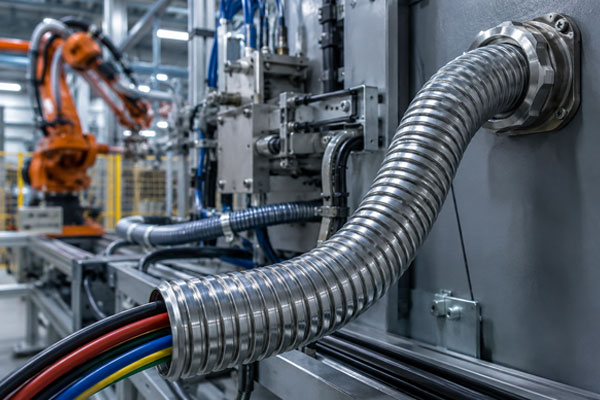
High Temp Flexible Conduit Pipe
Industrial wiring often works in places where normal cable protection is not enough. Heat, oil, dust, moisture, vibration, chemicals, and machine movement can damage electrical cables over time. A High Temp Flexible Conduit Pipe protects cables while allowing them to bend around machines, panels, motors, and narrow installation areas. It is commonly used in factories, power plants, automotive units, engineering workshops, furnaces, and outdoor electrical systems.
A Non-Metallic Flexible Conduit Pipe is useful when a project needs lightweight, corrosion-resistant, and easy-to-install cable protection. Unlike rigid metal conduit, it can move with equipment and does not rust in wet or chemical areas. Choosing the correct conduit can improve cable life, reduce maintenance expenses, prevent electrical faults, and support safer industrial operations.
What Is a High Temp Flexible Conduit Pipe?
A High Temp Flexible Conduit Pipe is a protective tube designed to carry electrical wires in areas exposed to high temperatures. It may be manufactured using heat-resistant PVC, nylon, engineered plastic, or another non-metallic material.
Its flexible body can bend around equipment without cracking or putting heavy pressure on the cables inside. This makes it suitable for complex cable routes where rigid pipes may be difficult to install.
The conduit protects electrical wiring from:
- High temperatures
- Dust and moisture
- Oil and chemicals
- Mechanical impact
- Cable abrasion
- Machine vibration
- Repeated bending and movement
Temperature limits can differ according to the material and product grade. Buyers should check the continuous working temperature, short-term peak temperature, and flame-retardant rating before placing an order.
Benefits of Non-Metallic Flexible Conduit Pipe
A Non-Metallic Flexible Conduit Pipe provides many practical advantages for industrial and commercial electrical projects.
Corrosion Resistance
Non-metallic conduit does not rust like metal piping. It is suitable for wet areas, chemical plants, coastal locations, food-processing units, and outdoor installations.
Easy Installation
The lightweight and flexible structure makes the conduit easier to carry, cut, bend, and install. It can reduce installation time, especially in complex machinery and narrow spaces.
Electrical Insulation
Non-metallic materials do not conduct electricity like metal. This property adds another layer of protection around electrical cables.
Better Cable Protection
The conduit protects cables from rubbing, crushing, cuts, dust, water splash, chemicals, and regular machine movement.
Common Uses of High Temp Flexible Conduit Pipe
A High Temp Flexible Conduit Pipe is mainly used where electrical cables are installed near heat-producing machinery or equipment.
Common applications include:
- CNC machines
- Industrial furnaces
- Boilers and ovens
- Welding machines
- Generators and motors
- Transformers
- Injection moulding machines
- Textile machinery
- Food-processing equipment
- Packaging machines
- Robotics and automation systems
- Automotive wiring
- Battery systems
- Outdoor electrical boxes
- Industrial lighting systems
Standard conduit may become soft, brittle, cracked, or weak when exposed to excessive heat. A properly selected high-temperature conduit provides better protection and longer service life.
High Temp Conduit vs Standard Flexible Conduit
| Selection Point | High Temp Flexible Conduit | Standard Flexible Conduit |
|---|---|---|
| Main Application | Cable protection near heat | General cable protection |
| Temperature Resistance | Higher, depending on grade | Suitable for normal temperatures |
| Common Locations | Furnaces, motors and machinery | Buildings and light equipment |
| Material | Heat-resistant engineered material | Standard PVC, nylon or plastic |
| Cost | Usually higher | Generally economical |
| Selection Method | Temperature verification required | Basic size and area checking |
A high-temperature conduit should not be selected only because it looks stronger. Buyers should compare technical specifications, testing standards, material quality, and recommended applications.
How to Select the Right Flexible Conduit Pipe
Selecting the right conduit is important for electrical safety and long-term performance.
Check the Operating Temperature
Identify the highest temperature around the cable route. Do not depend only on the room temperature. Motors, furnaces, steam lines, boilers, and closed control panels can create much hotter local conditions.
Select the Correct Diameter
The internal diameter should provide enough space for all cables. Overcrowding can make cable pulling difficult and may increase heat around the wires.
The conduit should also have enough space for future maintenance or additional cables where required.
Consider the Installation Environment
Check whether the conduit will be exposed to:
- Oil or chemicals
- Sunlight and outdoor weather
- Water or moisture
- Machine vibration
- Continuous movement
- Dust and dirt
- Fire or high heat
- Mechanical impact
Outdoor projects require UV- and weather-resistant conduit. Chemical plants may need a special material grade with better chemical resistance.
Use Compatible Accessories
Always use suitable connectors, glands, locknuts, junction boxes, and fittings. A strong conduit cannot provide complete protection when the fittings are loose, weak, or poorly sealed.
Why Product Quality Matters
Low-quality conduit may crack, flatten, soften, or lose flexibility after repeated heat exposure. It may also fail around oil, chemicals, moisture, or constant machine vibration.
Damaged conduit can expose electrical wires and increase the risk of:
- Short circuits
- Cable failure
- Machine breakdowns
- Electrical shock
- Production delays
- Expensive repairs
A good Non-Metallic Flexible Conduit Pipe should have uniform wall thickness, smooth internal cable movement, strong bend recovery, and reliable resistance to the conditions stated in its technical data sheet.
Installation Tips for Longer Service Life
Plan a short and safe cable route before installation. Keep the conduit away from unnecessary heat sources, sharp surfaces, and moving machine parts.
Avoid very tight bends because they can place stress on both the pipe and the cables. Support the conduit at suitable intervals so it does not hang, sag, or rub against machinery.
Provide enough length near moving equipment, but avoid loose loops that may become trapped in machine parts. Seal cable entry points properly where protection from dust, water, or chemicals is required.
The conduit should be inspected regularly. Replace it when it becomes brittle, burned, deeply cut, crushed, or permanently deformed.
Conclusion
A High Temp Flexible Conduit Pipe is a practical solution for protecting electrical cables in hot, moving, and demanding industrial environments. It protects wiring from heat, vibration, dust, moisture, chemicals, abrasion, and mechanical damage.
A Non-Metallic Flexible Conduit Pipe also provides useful benefits such as corrosion resistance, lightweight handling, electrical insulation, and easy cable routing.
The correct conduit should be selected according to the actual temperature, cable quantity, machine movement, moisture, chemicals, sunlight, and safety requirements. Quality materials, compatible fittings, proper installation, and regular inspection can improve cable life and reduce unexpected electrical failures.
Frequently Asked Questions
It is used to protect electrical wires installed near furnaces, motors, boilers, ovens, generators, machines, and other heat-producing equipment.
Yes. The selected pipe should have suitable UV, water, moisture, and weather resistance for outdoor installation.
Certain conduit grades provide resistance to oil and chemicals. Buyers should compare the product data sheet with the exact substance present at the installation site.
Consider the number and diameter of the cables. Select a conduit with enough internal space for easy cable pulling without overcrowding.
It depends on the application. Non-metallic conduit is lightweight, corrosion-resistant, flexible, and electrically insulating. Metal conduit may offer higher mechanical protection in some heavy-duty areas.
Yes. Select a conduit designed for repeated movement and install it with the correct bend radius, support, fittings, and extra movement length.
Conduit near high heat, chemicals, moisture, or moving equipment should be inspected regularly for cracks, burns, loose fittings, crushing, and deformation.
Ask about material type, temperature range, sizes, flame rating, IP protection, UV resistance, chemical resistance, compatible connectors, test reports, minimum quantity, and delivery time.