How to Choose the Right Flexible Pipe Size for Electrical Wiring
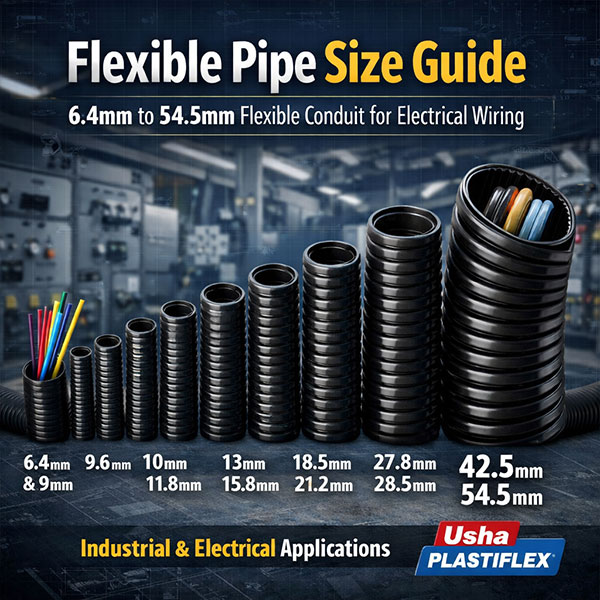
Choosing the right flexible pipe is one of the most important decisions for any electrical or industrial project. A flexible pipe acts as a protective housing for your wires, keeping them safe from heat, moisture, and physical damage. Because every project is different, these pipes are available in a wide range of sizes, from a tiny 6.4mm Flexible Pipe to a heavy-duty 54.5mm Flexible Pipe.
If you choose a size that is too small, your wires may overheat or get damaged during installation. If the pipe is too large, it might not fit in tight machine spaces. This guide will help you understand the different sizes available and how to pick the perfect one for your specific wiring needs in 2026.
What is a Flexible Pipe?
A Flexible Pipe is a corrugated protective tube designed to hold and protect electrical cables. Unlike traditional rigid pipes, these can bend and flex easily. This flexibility allows them to be used in complex layouts where wires need to go around corners or connect to moving parts.
These pipes are essential for protecting cable insulation from being cut or worn down. They are used in various industries, including:
Why Precision Sizing is Critical
The selection of a Flexible Pipe acts as a foundational safety measure for any electrical system. Choosing the right diameter is not just about convenience; it is about preventing system failure.
If the selected pipe diameter is too small:
How Flexible Pipe Systems Protect Electrical Wiring
Flexible pipe systems are engineered for diverse environments, providing a comprehensive defense for bundled electrical cables against vibration, abrasion, and environmental damage.
Flexibility for Complex Wiring Routes
High-quality Flexible Pipe Systems are engineered to protect electrical wiring from the constant mechanical stress and environmental exposure found in industrial settings. As equipment operates over time, these systems absorb external forces to prevent insulation wear or wire fatigue.
Durable materials used in these systems maintain high performance under harsh industrial conditions. By reducing cable strain and external damage risks, flexible pipes contribute to improved electrical reliability and significantly reduced maintenance requirements across automotive and industrial applications.
Enhanced Protection and Extended Service Life
High-quality Flexible Pipe Systems are engineered to protect electrical wiring from the constant mechanical stress and environmental exposure found in industrial settings. As equipment operates over time, these systems absorb external forces to prevent insulation wear or wire fatigue.
Durable materials used in these systems maintain high performance under harsh industrial conditions. By reducing cable strain and external damage risks, flexible pipes contribute to improved electrical reliability and significantly reduced maintenance requirements across automotive and industrial applications.
Where Are Flexible Pipes Used?
You can find these protective solutions almost everywhere you look. They are essential for a wide range of buildings and systems:
Flexible Pipe Size Comparison Table
Use this quick-reference chart to identify the appropriate size for your industrial or residential application:
| Flexible Pipe Size | Typical Application | Cable Capacity | Common Industry |
|---|---|---|---|
| 6.4mm & 9mm | Miniature sensors and data links | 1-2 thin wires | Robotics & IT |
| 10mm & 11.8mm | Internal machine control logic | 2-3 small wires | Automation |
| 13mm & 15.8mm | Lighting fixtures and small tools | 3-4 standard wires | Residential |
| 18.5mm & 21.2mm | Standard commercial branch circuits | 4-6 wires | Commercial |
| 27.8mm & 28.5mm | Heavy machinery and HVAC power | 6-8 thick wires | Industrial |
| 34.5mm & 36mm | Main feeder lines and data bundles | Large bundles | Manufacturing |
| 42mm & 54.5mm | Primary facility power supply | Maximum wire density | Heavy Industry |
Understanding Flexible Pipe Technology
The production of modern Flexible Pipe systems involves the use of advanced polymer compounds specifically engineered for high-performance cable management. These specialized materials are designed to provide a unique balance of extreme flexibility and high mechanical strength, ensuring that electrical wires remain protected even in environments characterized by constant vibration and repetitive movement.
A key technological feature of these pipes is their dual-surface design. The corrugated exterior is built to enhance impact resistance and provide superior compression strength, while the smooth inner wall is designed to significantly reduce cable friction during the installation process. This intelligent design not only minimizes the pulling force required to route wires but also prevents damage to sensitive insulation layers.
Furthermore, high-performance flexible pipes are engineered to resist a variety of external hazards, including industrial oils, dust, moisture, and chemical exposure. Their ability to withstand UV radiation and extreme weather makes them a reliable choice for everything from automotive wiring and robotics to outdoor infrastructure and complex control panels.
Frequently Asked Questions
What is a flexible pipe used for?
It is primarily utilized to safeguard bundled electrical cables from potential mechanical damage, vibration, and exposure to harsh environmental factors.
How do I choose the correct flexible pipe size?
You should measure the total diameter of your cable bundle and ensure you leave additional internal space to allow for proper airflow and future expansion.
Are flexible pipes suitable for outdoor installations?
High-quality flexible pipes are designed to resist moisture, temperature variations, and UV exposure, making them ideal for outdoor infrastructure.
Why is flexibility important for industrial wiring?
Flexibility prevents excessive cable strain during movement, which reduces the risk of electrical failure or damage to the cable insulation.
What is the difference between small and large flexible pipes?
Small pipes (like 6.4mm) are typically used for delicate sensors and robotics, while larger pipes (up to 54.5mm) are used for heavy-duty industrial power feeders and main service entrances.
Choosing the Right Flexible Pipe
Selecting the appropriate Flexible Pipe is a fundamental step in improving cable safety and simplifying the installation process. When you choose the correct pipe size, you ensure that your electrical cables remain fully protected from mechanical stress, constant vibration, and harsh environmental conditions throughout their entire lifecycle.
By investing in high-quality flexible pipe solutions, engineers and manufacturers can build electrical systems that are not only efficient and organized but also future-ready. These systems are essential for modern industrial, automotive, and infrastructure applications where reliability is the top priority.