Industrial Wiring Safety Solutions Using Polypropylene Flexible Conduit
Heavy Duty Polypropylene Flexible Conduit is an advanced cable protection solution designed for modern electrical installations. It provides strong mechanical safety, high flexibility, and long service life in industrial environments.
Electrical wiring systems often face challenges such as vibration, moisture, heat exposure, and physical damage. Using a heavy duty conduit helps prevent cable failure and ensures smooth system performance.
This guide explains the features, benefits, applications, and correct usage of heavy duty polypropylene flexible conduit in simple language.

What Is Heavy Duty Polypropylene Flexible Conduit?
Heavy Duty Polypropylene Flexible Conduit is a corrugated protective pipe made from high-grade polypropylene material. It is specially designed to protect electrical cables from external damage while allowing flexible routing in tight or moving installations.
Unlike rigid conduit pipes, flexible conduits easily bend around machinery, panels, and structural corners. This makes installation faster and more efficient in industrial wiring systems.
Why Choosing Heavy Duty Conduit Is Important
Selecting a strong and reliable conduit improves electrical safety and reduces long-term maintenance problems.
If cables are not protected properly:
- Insulation may wear out due to vibration
- Moisture and dust may affect wiring performance
- Installation can become complex and unsafe
- Cable overheating risks may increase
Using heavy duty polypropylene flexible conduit ensures proper cable spacing, airflow, and mechanical protection.
How Heavy Duty Polypropylene Flexible Conduit Protects Wiring
Mechanical Strength
Moisture & Dust Resistance
Vibration Absorption
Thermal Stability
Selecting the Right Conduit Size for Installation
Choosing the correct conduit diameter is important for smooth cable routing and long-term performance.
- Small sizes are suitable for sensors and light control wiring
- Medium sizes work well in electrical panels and machinery
- Large sizes are ideal for heavy power cables and industrial bundles
Proper sizing helps prevent cable compression, improves ventilation, and allows easy maintenance in future.
Applications of Heavy Duty Polypropylene Flexible Conduit
These conduits are widely used in many sectors such as:
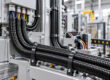
Industrial Machinery
Used in CNC machines, automation lines, robotics systems, and production equipment.
Electrical Control Panels
Provides organized cable entry and safe routing inside switchgear and panel boards.
Construction & Infrastructure
Ideal for commercial wiring, HVAC systems, lifts, and building electrical networks.
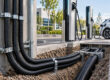
Solar & Outdoor Installations
Suitable for solar plants, outdoor lighting systems, and exposed cable pathways.
Comparison with Traditional Rigid Conduit
| Feature | Heavy Duty Flexible Conduit | Rigid Conduit |
|---|---|---|
| Flexibility | Very high | Low |
| Installation Time | Quick and easy | Time consuming |
| Cable Safety | Excellent | Good |
| Best Use | Machines & panels | Straight routes |
| Maintenance | Low | Moderate |
Understanding Heavy Duty Flexible Conduit Technology
Heavy duty polypropylene flexible conduits are engineered to meet modern industrial wiring requirements. Their lightweight yet strong construction makes them suitable for high-performance applications where cable safety is critical.
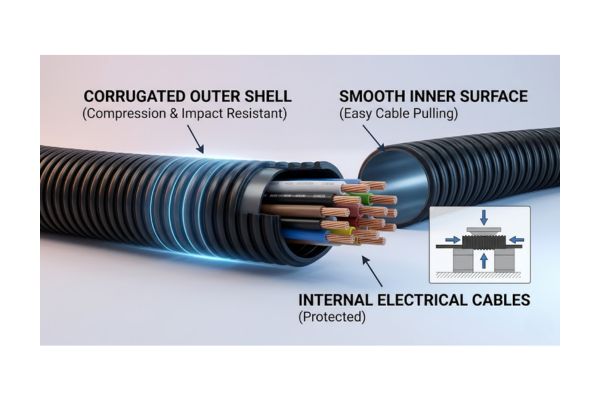
The outer corrugated design improves compression resistance, while the smooth inner surface allows easy cable pulling. This reduces installation effort and protects cable insulation.
These conduits also offer resistance to chemicals, UV exposure, and mechanical stress. As industries move towards automation and smart infrastructure, reliable cable management solutions like heavy duty flexible conduits play a vital role in ensuring electrical system stability and operational efficiency.
FAQ’S – Heavy Duty Polypropylene Flexible Conduit
It is mainly made from high-grade polypropylene polymer for strength and flexibility.
Yes, it offers good resistance to moisture, sunlight, and environmental conditions.
It is commonly used in industrial machinery, control panels, solar systems, and construction wiring.
Proper sizing prevents cable overheating, improves airflow, and ensures safe installation.