Why Does Camera Cable Routing Matter in Automated Inspection?
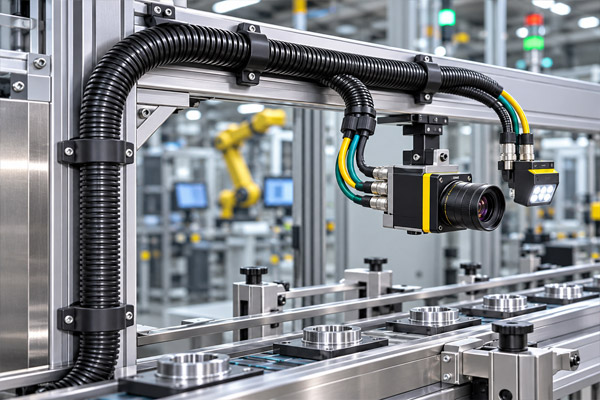
A polyethylene flexible pipe can provide mechanical protection and a defined route for suitable camera cables in automated inspection equipment. Here, the term refers to PE cable protection conduit. The selected product needs to suit the cables, installation space and operating environment.
Think about a camera checking labels above a conveyor. Its data and power connections may run past brackets, machine guards and lighting equipment before reaching the control system. That route deserves attention during machine design.
As AI-assisted inspection develops in 2026, cable routing remains a practical part of the installation. A suitable layout helps protect connections and leaves access for maintenance, alongside the camera, lighting and software requirements.
Start with the Cable and Connector
Begin with the cables specified for the camera system. Different connections may carry image data, power, trigger signals or lighting control.
Record their outside diameters and connector dimensions before selecting the conduit. A factory-fitted connector can need more installation space than the cable behind it.
Also establish when the conduit will be fitted. Closed tubing needs an installation method that accommodates the cables and connectors. A suitable slit version may be considered where existing cable assemblies need protection.
Let the Cable and Pipe Shape the Route Together
A conduit may bend neatly around a machine frame while the cable inside requires a broader curve. The finished route must satisfy both sets of bending requirements.
Check the cable manufacturer’s limits for the intended installation and compare them with the conduit data. Requirements can differ between a fixed route and one that moves repeatedly.
Look closely at corners near the camera mount and control enclosure. These areas can become tight when equipment is positioned within a compact machine.
Plan sufficient space for the complete protected connection. Keep the cable arrangement inside the conduit orderly, without unnecessary twisting or tangling.
Check the Heat Around Lights and Enclosures
The temperature along a cable route can vary. A section near lighting equipment, a warm enclosure or another process component may face different conditions from the surrounding workspace.
Usha Plastiflex’s polyethylene conduit product information lists a dynamic temperature range of minus 15°C to plus 60°C, with short-term exposure up to plus 80°C.
Confirm that the proposed grade matches the normal operating conditions and any temporary heat exposure.
A short-term temperature figure does not establish suitability for continuous operation at that temperature. Share the expected conditions with the supplier when discussing the product.
Treat Moving Cameras as a Separate Design Task
Some inspection cameras remain fixed above a production line. Others move with a positioning unit, adjustable assembly or robotic system.
Describe the actual movement before choosing cable protection. The direction, travel, bending frequency and expected service life all affect the assessment.
A temperature rating or a flexible appearance does not establish a repeated bending life. Moving installations need suitable cables, conduit and supporting components.
Ask for relevant performance information and evaluate the proposed arrangement with the machine designer. Where twisting is involved, include that requirement specifically. A cable approved for a drag chain may have different limitations from one intended for robotic movement.
Keep Mechanical Protection and Signal Quality in View
PE conduit provides a physical cable route. Electromagnetic shielding depends on the cable construction and the complete electrical installation.
Follow the camera manufacturer’s instructions for cable selection, routing, shielding and grounding. Pay attention to nearby motors, drives and other equipment identified in those instructions.
The protection layout should support these requirements without forcing incompatible connections into the same route.
When a vision system develops communication problems, assess cable condition, connectors, power supply and network settings through the camera system’s troubleshooting process.
Make the Camera End Easy to Service
A camera connection needs enough space for installation and later maintenance. Review access to locking rings, plugs, mounting screws and nearby lighting connections.
Supports should hold the route in position while avoiding unwanted strain at the connector. The arrangement should also allow any adjustment required by the machine design.
Think about what happens during camera replacement. Can the relevant connector be reached? Can the cable be inspected without disturbing an unrelated section?
Keep the protected route clear of the camera’s viewing area and the machine’s inspection space.
Check the Layout During a Machine Trial
A trial helps show how the proposed route behaves when the machine operates.
Observe the connection during normal movement, guard opening and approved maintenance access. Check for snagging, rubbing, tight bends or tension at cable ends.
For moving equipment, assess the arrangement across its intended travel under the agreed test conditions. Confirm that the cable and conduit remain correctly supported.
Also verify camera communication as part of the wider machine test. Record the configuration, adjustments and observations so the installation team has a clear reference.
Any later change to the camera position or cable type should trigger a review of the affected route.
Discuss Your Camera Cable Requirements with Usha Plastiflex
Usha Plastiflex manufactures flexible conduit products in Ahmedabad, Gujarat, including polyethylene options in standard and slit forms.
Machine builders, automation integrators and industrial buyers in Ahmedabad, across Gujarat and elsewhere in India can share their requirements with the team.
Provide cable and connector dimensions, the proposed route, temperature conditions, movement details and quantity. Include any specified testing, material or documentation requirements.
Discuss the available product options, samples, supply lengths and delivery arrangements before ordering. Keep the selected product reference with the machine’s cable layout for repeat requirements.
Conclusion
Polyethylene flexible pipe selection for camera cabling begins with the complete installation. Cable bending limits, connector access, heat and movement all influence a practical protection route.
Contact Usha Plastiflex with your machine layout and operating details to discuss suitable conduit options. Evaluate the proposed arrangement with your camera and machine requirements before approving it for production.
Frequently Asked Questions
Check the cable bundle diameter, connector dimensions and required installation clearance. Compare these with the conduit’s usable internal diameter and assess the fit along the proposed route.
A suitable slit product can be considered when connectors are already fitted. Confirm the closure, supports and environmental requirements before selecting it for the existing cable assembly.
Suitability needs assessment for the actual movement, including repeated bending and twisting. Request relevant product information and evaluate the conduit, cables and supports as a complete arrangement.
Use the specified operating range for normal service. Short-term exposure limits apply under different conditions and need confirmation against the expected temperature and duration of exposure.
Standard PE conduit provides mechanical protection. Interference control depends on suitable cables, shielding, grounding and routing according to the camera system’s installation requirements.
The camera’s rating does not automatically apply to the surrounding cable protection. Confirm the required performance of the complete connection, including conduit, fittings and connector interfaces.
Share the required size, cable and connector dimensions, conduit form, quantity and delivery location. Include temperature, movement, installation conditions and any specified documentation or test requirements.